
Finding the right wholesale restaurant supplier feels impossible. You deal with middlemen who inflate prices and unreliable sources that cause delays. This frustration directly hurts your business and your profits.
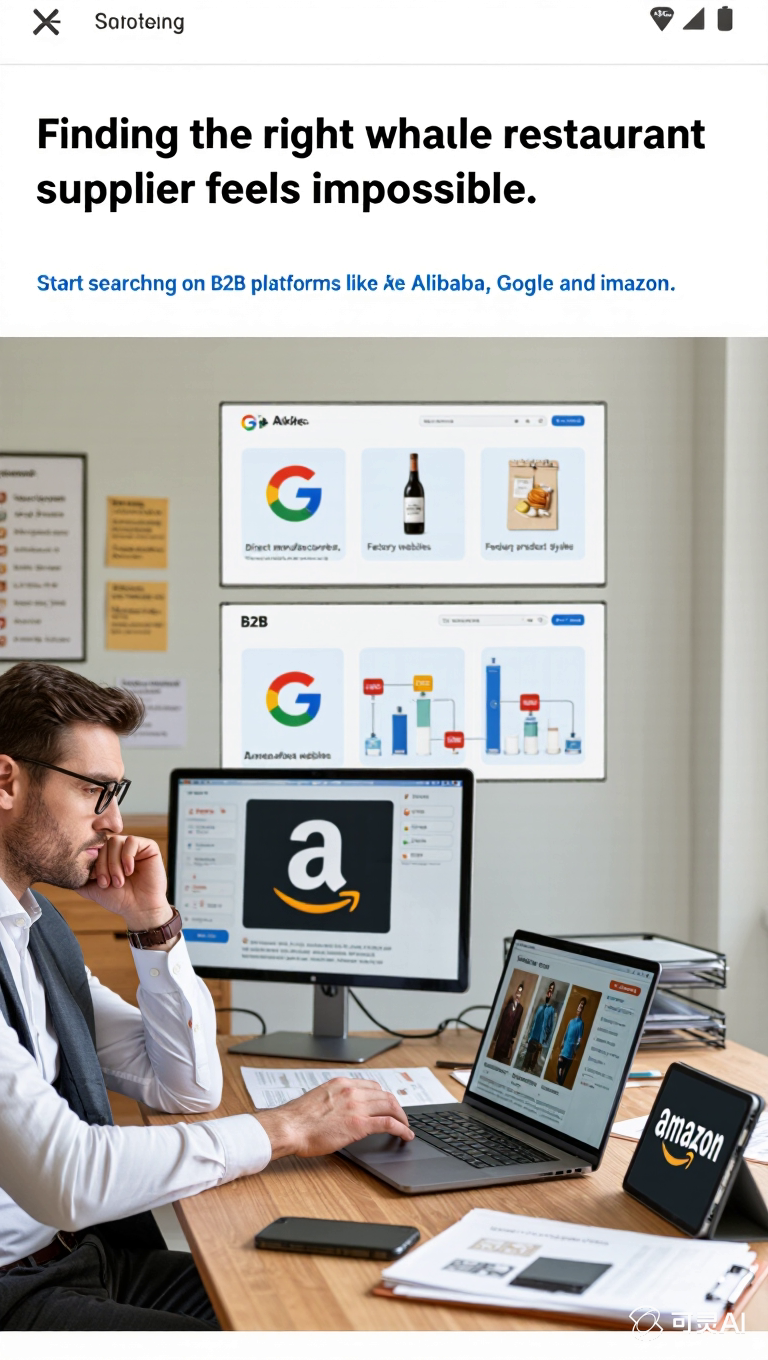
To find a wholesale restaurant supply, start by searching on B2B platforms like Alibaba for direct manufacturers. Use search engines like Google to find factory websites, and browse B2C sites like Amazon to identify popular product styles and market trends for your business.
Finding a supplier is the first step. That part is relatively straightforward. But the real challenge is finding a partner who gives you a genuine competitive advantage. It's not just about getting the products; it's about getting them at a price that lets your business thrive. The secret is knowing where to look to bypass the extra layers and connect directly with the source. Let's dig into the methods that will help you find suppliers with much better pricing and build a more profitable business.
How to find a wholesale restaurant supply with more competitive prices?
High wholesale prices are constantly eating into your margins. Every extra dollar you spend on inflated costs from a middleman is a dollar you lose from your bottom line. There are specific strategies you can use to uncover true factory-direct suppliers and secure much better pricing.
To find suppliers with more competitive prices, you must bypass middlemen. Use search engines to find direct factory websites, explore B2B platforms like Alibaba, and consider visiting factories in person if your order volume is high. These methods connect you to the source, cutting costs significantly.
Getting a competitive price is all about reducing the number of hands the product passes through before it gets to you. The closer you get to the actual factory floor, the lower your cost will be. In my years of sourcing, I've learned that a few key strategies are far more effective than others. It's a process of investigation and verification. You need to become a detective, looking for clues that prove you're talking to a real manufacturer and not just another reseller. This approach requires a bit more effort upfront, but the payoff in lower costs and a more reliable supply chain is enormous. I've broken down the most effective methods I use to find and verify these direct manufacturing partners. Each method has its own strengths, and combining them will give you the best results.
Using B2B and B2C Platforms
B2B platforms are the most common starting point. Sites like Alibaba and Made-in-China are huge directories of suppliers. The key is to filter your searches effectively. Instead of just searching for "plastic plates," I search for "plastic plate manufacturer" or "disposable tableware factory." Look for profiles that are listed as "Manufacturer" and have verification badges. These platforms often provide virtual tours and show photos of their production lines. I also use B2C platforms like Amazon and Etsy, but for a different reason. I don't source from them. I use them for market research. I can see which designs are best-sellers. For example, I might notice that plates with a marble finish or a gold rim are trending. I take this information back to the B2B platforms and search for manufacturers who specialize in those specific aesthetics. This two-step process helps me find a factory that not only offers good prices but also makes products that are already popular with customers.
Finding Direct Manufacturers with Search Engines
This is my favorite method for finding hidden gems. I go to Google or Bing and get very specific with my search terms. I use phrases like "wholesale wedding dinnerware factory China," "custom logo disposable plate manufacturer," or "FDA compliant PS cutlery supplier." This often leads me to the independent websites of manufacturers. A factory that invests in its own website is often more established. Once I land on a site, I put on my detective hat. I immediately look for an "About Us" page or a "Factory Tour" section. I want to see real, authentic photos of their facility, their machines in operation, and their team. I look for a dedicated page for certifications, where they post their FDA or LFGB compliance documents. A good manufacturer is proud of their factory and their quality standards. They will make this information easy to find. I remember once finding a great supplier this way. Their website had a video walk-through of their entire process, from raw PS material to the final packaged product. That level of transparency gave me the confidence to reach out.
The Power of In-Person Connections
Nothing builds trust like a face-to-face meeting. For larger businesses or those looking for deep customization, attending trade shows or visiting factories directly is the ultimate step. Trade shows, like the Canton Fair in China, gather thousands of suppliers under one roof. You can touch the products, meet the sales team, and negotiate directly. However, this can be expensive and time-consuming, so it's best for buyers with significant volume.
A direct factory visit is even more powerful. I did this early in my career, and it changed how I viewed sourcing. Being on the factory floor, you see their quality control processes firsthand. You can discuss complex customizations, like custom molds or unique packaging, with their engineers. This is how you build a true partnership. It shows the supplier you are a serious buyer. Of course, this requires knowledge of the manufacturing country and is a major investment.
Here is a simple breakdown of these in-person methods:
| Method | Cost | Time Investment | Best For | Key Benefit |
|---|---|---|---|---|
| Trade Shows | High | Medium | Large volume buyers | Compare many suppliers quickly |
| Factory Visits | Very High | High | Serious, long-term partners | Ultimate verification and trust-building |
Tapping into Social Media
In recent years, social media has become a surprisingly effective tool for finding suppliers. Platforms like TikTok and YouTube are not just for entertainment. Many factories are now using these channels to showcase their production capabilities. I search for hashtags like #factoryprocess, #tablewaremanufacturer, or #plasticplatesfactory. You can find short videos showing machines stamping out plates, workers applying gold rims, or automated arms packing boxes. These raw, unpolished videos are often more telling than a slick corporate advertisement. They give you a real glimpse into the factory's daily operations. I've found potential partners by seeing a video of their injection molding process for high-quality PS cutlery. When you find a video that looks promising, you can often find a link to their website or Alibaba page in the profile bio. This is a modern, visual way to discover and vet manufacturers before you even send the first email. It’s a low-effort way to add more potential suppliers to your list.
Conclusion
Finding the right wholesale supplier means going direct. Use these methods to connect with real manufacturers, cut out the middlemen, and build a more profitable and reliable supply chain.